
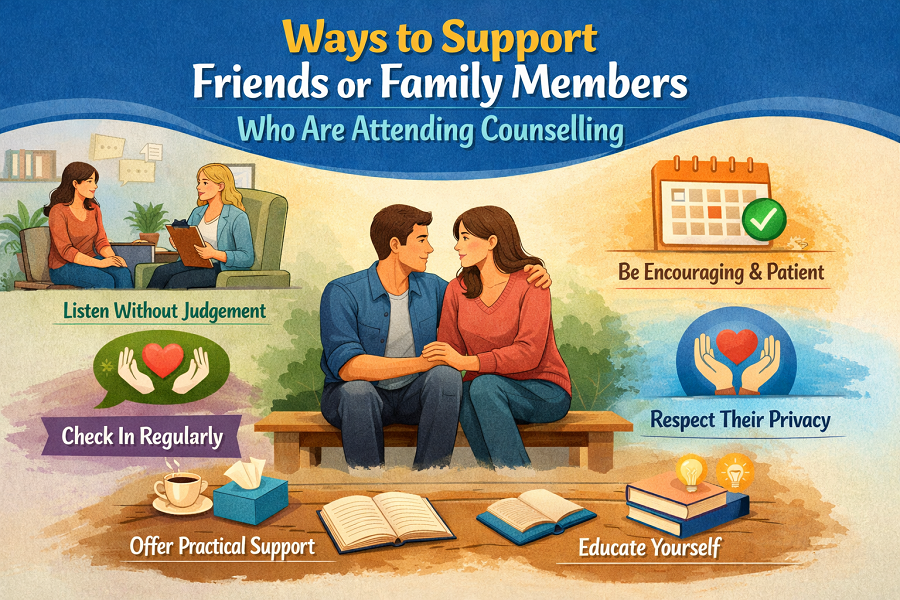
When someone close to you begins counselling, it often means they are taking an important step toward improving their mental health and wellbeing. While this journey is deeply personal, the support of trusted friends and family members can make a meaningful difference. Knowing how to offer encouragement without overstepping boundaries can help create a safe and positive environment for your loved one. Attending counselling gives you a safe, confidential space to talk openly about your thoughts, emotions, and life challenges without judgment. It helps you gain clarity, build healthier coping skills, and move forward with greater confidence and emotional balance.
Family Members Who Are Attending Counselling
1. Respect Their Decision and Show Encouragement
The first step in supporting someone attending therapy is acknowledging their courage. Seeking professional help is not always easy, and your acceptance can help reduce any fears or stigma they may feel. Avoid questioning their decision or demanding explanations. Instead, offer simple reassurance like, “I’m proud of you for taking care of yourself.” Positive reinforcement helps them feel validated and respected.
2. Listen Without Trying to Fix Everything
Many people assume they need to provide solutions, but often the most powerful support comes from simply listening. Give your full attention when your loved one wants to talk. Avoid interrupting or offering immediate advice unless they ask for it. Sometimes they may just need to share feelings or experiences without judgment. Being present and patient shows that you care about their emotional wellbeing.
3. Educate Yourself About Counselling
Understanding the basics of therapy can help you become a more empathetic supporter. Learning what a counsellor Gold Coast professional does or how therapy sessions typically work can help you manage expectations. Remember that progress may be gradual and that emotional ups and downs are normal. When you understand the process better, you are less likely to make assumptions or pressure your loved one for quick results.
4. Respect Privacy and Boundaries
Not everyone feels comfortable sharing details about their counselling sessions. Respect their privacy and avoid pushing for information. If they choose to open up, listen with compassion, but if they prefer to keep things private, honour that choice. Support does not mean knowing every detail—it means being a safe and respectful presence in their life.
5. Offer Practical Support When Needed
Practical gestures can make a big difference. You might offer to help with daily tasks, childcare, or transportation to appointments if appropriate. Small acts of kindness can reduce stress and allow them to focus on their healing journey. In the middle of their personal growth, they may find attending Counselling Gold Coast sessions emotionally demanding, so having dependable support around them can help create stability and reassurance.
6. Encourage Healthy Habits Together
Invite your loved one to join you in activities that promote wellbeing, such as walking, exercising, or practicing mindfulness. Shared healthy habits can boost mood and create positive experiences without placing pressure on them to discuss therapy. The goal is to create supportive moments that strengthen your relationship and contribute to a balanced lifestyle.
7. Be Patient With Their Progress
Healing is rarely a straight path. There may be setbacks or emotional days along the way. Try to remain patient and avoid expressing frustration if changes do not happen quickly. Celebrate small victories and remind them that growth takes time. Your consistent presence can help them stay motivated and feel less alone during challenging periods.
8. Take Care of Yourself Too
Supporting someone through their counselling journey can sometimes feel emotionally heavy. Make sure you maintain your own boundaries and self-care routines. When you are emotionally balanced, you are better able to provide meaningful support without feeling overwhelmed or burnt out.
Conclusion
Supporting a friend or family member who is attending counselling involves empathy, patience, and respect. By listening without judgment, maintaining healthy boundaries, and offering both emotional and practical support, you can help create a positive environment that encourages healing. Your understanding and kindness may not solve their challenges, but they can make the journey feel safer and more supported every step of the way.